

THE OUTSIDER’S VALENTINE
LOVE BEYOND ROSES AND RUIN

I want to start this human-delirium with this masterpiece of Rimbaud.
"Beauty is flesh, nothing more—
Rotted skin stretched over brittle bone,
A mask for the worms to gnaw upon.
A face of desire, emptied of soul."
—Arthur Rimbaud
Arthur Rimbaud is one of the most visceral poets from the nineteenth century. His famous work was—A Season in Hell" (1873). He had a troubled life and was an outsider most of his life. What does it mean to be an outsider? Do they not become the heroes of their own depth-oracle? They hear themselves—from inside—screaming to tear apart reality. Reality never holds perfection; it looks smoother than you think, but the veil is thicker than you imagine—rotting. If you ever see his eyes—pale and hollowed—they are staring at something, searching for the unknown reality of human existence. Whenever I see his portrait, it gives me the fatigue of romance—slowly penetrating my soul—and stabbing a bit—bleeding and wounded words reflecting onto his cheekbone. It is so surreal to stare at such a prolific lump of history.
Who could abandon writing at twenty? We start writing at twenty. But he was a genius figure, like Raphael’s La Fornarina—his poetry calls readers, “Come, devour my existence.” He wrote sixty lines of poetry in Latin at the age of thirteen—is he not a complete, soulful freak? Yes, this was his genius portfolio. Everything that haunts you emerges from the terrified depths of your hidden chamber, which you have lidded with the most obscure outline of existence. You want to hide it, but whoever frees it will become the man-genius.
Here, Rimbaud tried at his most rebellious—refusing to conform to societal ideals and showing beauty for what it really is: flesh destined to rot, roses destined to fall from your delirious hands. But the inner value of freshness remains eternity—which poets know better—which outsiders know better. Raphael depicted his value in La Fornarina’s bared nipples and unveiled drapery—if that is not the value of concentration to beauty, then what should it be? In our long human-drag, we have completely forgotten how to admire beauty and insist upon the concentration to beauty as a concept of human faculty.
Imagine the outsider standing in today’s world, surrounded by shallow performances of romance and environmental slogans. He’s not bitter—he’s heartbroken. Yet, in that heartbreak, he finds a kind of freedom. He doesn’t need society’s permission to love. He doesn’t need a Hallmark card to feel connected. His love is for the earth, for humanity, for the terrifying beauty of existence itself.
L'Enfer’s unnamed narrator’s voyeuristic act drives him to existential despair, the search for truth, and the dark side of human nature. He sees from The Hole the emptiness behind societal masks. Barbusse’s narrator resembles the alienated characters of Rimbaud or even Dostoevsky’s Underground Man—full of internal torment and cynical reflections on beauty, morality, and life’s purpose. What kind of beauty and love are we seeking on this desperate planet of so-called humans? We have eyes, legs, skin, and bone, but how do we interact with these primary seducers to unravel the quest of our intimacy? Are we not lost on our own journey amidst these neat or Instagram-perfect love stories? The outsider understands everything—he knows beauty from his corporeal eyes and encompasses the sole acts of art and loyalty.
I can’t see the world naked as Actaeon did when he saw her bathing, but I have suffered the consequences of my inquisitive nature and my attempts to understand the human world, which have resulted in tearing me down into millions of pieces from your piercing orientation. Even though I am not able to witness the beauty of the world in its most raw and natural form, I still strive to learn more about it, often at the cost of the purity of my own vision. I continually ask myself this question: Am I captivated by something I shouldn’t be? If not, why do I feel this intense desire to witness the unvarnished truth of the world?—
Who Will Bury the Dead God, pg. 56.
The outsider seeks just the truth—nothing else, no comfort in illusions, no refuge in convention. They walk the margins of society, unchained by the need for approval, undeterred by the weight of solitude. The truth, raw and untamed, is their only guide, even when it wounds, even when it leaves them standing alone in a world that prefers beautiful lies.
The Hollow Performance of Modern Love
When you meet someone next time, do not forget to ask—Is he an outsider or not? The outsider is the epitome of the knower of beauty. Valentine’s Day offers a convenient lens for examining the outsider’s rejection of societal rituals. My girlfriend asked me, “Where are my roses?” What should be the answer! Relationships are curated for Instagram likes, Facebook reels-hit, proposals are staged for maximum public attention, and love itself is reduced to consumer goods—shallow in taste and appetite. But the outsider, observing all of this, feels not bitterness but profound sadness upon this inflicted disease of humanity.
When everything else is minimized for these ridiculous performances, when a simulation no longer even pretends to have substance—do you know what I have uttered in your face this moment? Van Gogh’s admiration for his sliced ear was not just Instagram-worthy; it perpetuates into the realm of unknown devotion. This kind of love extends beyond the romantic. But how do you love a world that seems bent on its own destruction? This perennial question saddens me every time I widen my eyes to see those unseen answers—they have never been answered anyway. But what would be the comfortable approach to this kind of devotion? Madness.
We have seen the roses but never appreciated Ophelia’s death—yet it represents the ultimate loss of innocence.
The Outsider’s Love: A Search for Meaning in Chaos
No one embraced chaos more fully than Rimbaud. For every outsider, love is the performance of the soul—the dance of the divine. His work evokes the image of the outsider not as a victim of alienation but as someone willing to destroy societal illusions in the pursuit of something real. The outsider feels disconnected from the outer world not because he lacks love but because he craves deeper connections to it. He tries to see order behind every act and wanders like Diogenes, searching for the Honest Man.
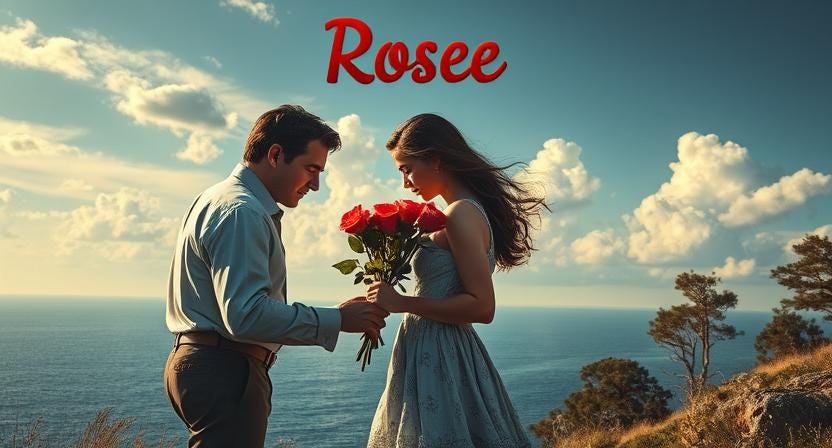
The outsider’s love isn’t confined to one person or one day. It’s love for life in its rawest form. Imagine an ancient painting like Botticelli’s Primavera—a figure on the edge of madness. In this way, he admires love as a chaotic act, not just a hollow duty. It’s this force that the outsider seeks to embrace, even if it means standing apart from society’s shallow ideas of affection. If you see anyone giving roses to his beloved one, remember—his act is profane, not an act of duty.
When I feel the coherent acts in the human podium, I do not dance along with them. It is the fact of not fitting into the puzzle, because humans want mockery and duplication—they act by seeing others act. But the outsider performs his acts to destroy the norms—that makes him the outsider. Picture him stepping out of Edvard Munch’s The Scream, but not just screaming into the void. This time, he’s staring at Valentine’s Day, where love has been packaged, commercialized, and neatly tied with a pink bow.
This is the outsider’s Valentine. And it’s the only one worth giving.
A beautiful and intense exploration of love, beauty, and society. The literary references and raw critique powerfully challenge conventional views. I’m left reflecting on how we commodify love and what it really means to be seen. This is the kind of writing I strive to achieve in my essays. I admire your work, here.